
<?xml version="1.0" encoding="UTF-8"?>
<rss version="2.0"
	xmlns:content="http://purl.org/rss/1.0/modules/content/"
	xmlns:wfw="http://wellformedweb.org/CommentAPI/"
	xmlns:dc="http://purl.org/dc/elements/1.1/"
	xmlns:atom="http://www.w3.org/2005/Atom"
	xmlns:sy="http://purl.org/rss/1.0/modules/syndication/"
	xmlns:slash="http://purl.org/rss/1.0/modules/slash/"
	>

<channel>
	<title>Ginger &#38; Tomato &#187; Ayinger Ur-Weisse</title>
	<atom:link href="http://www.gingerandtomato.com/tag/ayinger-ur-weisse/feed/" rel="self" type="application/rss+xml" />
	<link>http://www.gingerandtomato.com</link>
	<description>Ricette, dolci e torte, pasta, pesce, pollo, zuppe, formaggi, bimby</description>
	<lastBuildDate>Tue, 14 Feb 2012 12:30:13 +0000</lastBuildDate>
	<language>it</language>
	<sy:updatePeriod>hourly</sy:updatePeriod>
	<sy:updateFrequency>1</sy:updateFrequency>
	<generator>http://wordpress.org/?v=3.3.1</generator>
<xhtml:meta xmlns:xhtml="http://www.w3.org/1999/xhtml" name="robots" content="noindex" />
		<item>
		<title>Storia della birra: dal medioevo la Ayinger Ur-Weisse</title>
		<link>http://www.gingerandtomato.com/diete-ipercaloriche/storia-della-birra-dal-medioevo-la-ayinger-ur-weisse/#utm_source=rss&#038;utm_medium=rss&#038;utm_campaign=storia-della-birra-dal-medioevo-la-ayinger-ur-weisse</link>
		<comments>http://www.gingerandtomato.com/diete-ipercaloriche/storia-della-birra-dal-medioevo-la-ayinger-ur-weisse/#comments</comments>
		<pubDate>Tue, 21 Oct 2008 08:00:07 +0000</pubDate>
		<dc:creator>liulai</dc:creator>
				<category><![CDATA[Alimenti IPERcalorici]]></category>
		<category><![CDATA[Bevande Alcoliche]]></category>
		<category><![CDATA[Ayinger Ur-Weisse]]></category>
		<category><![CDATA[baviera]]></category>
		<category><![CDATA[birra]]></category>
		<category><![CDATA[malto]]></category>
		<category><![CDATA[Ur-Weisse]]></category>

		<guid isPermaLink="false">http://www.gingerandtomato.com/?p=5567</guid>
		<description><![CDATA[La Baviera è la patria delle birre di frumento tedesche: le Weizenbier o Weissbier (birre bianche) hanno la più alta percentuale di grano. Per legge non inferiore al 50 per [...]]]></description>
			<content:encoded><![CDATA[<div id="archive_1"></div><script type="text/javascript">
<!--
generabanner('archive_1');
//-->
</script><p align="center"><img class="aligncenter size-full wp-image-5571" title="rieserweizenbier" src="http://cdn.gingerandtomato.com/wp-content/uploads/2008/10/rieserweizenbier.jpg" alt="" width="450" height="500" /> </p>
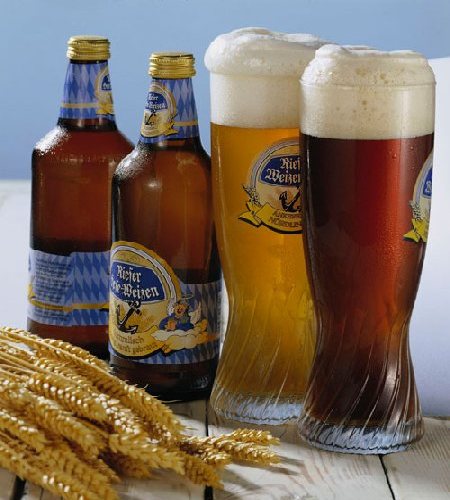
<p>La<strong> Baviera</strong> è la patria delle<a href="http://www.gingerandtomato.com/i-consigli-preziosi/dizionario-alimentare/birra-e-cibo-ecco-i-giusti-abbinamenti/" target="_blank"> birre di frumento tedesche</a>: le <strong>Weizenbier o Weissbier</strong> (<em>birre bianche</em>) hanno la più alta percentuale di grano. Per legge non inferiore al 50 per cento del cereale impiegato e non superiore al 70 per cento. Il nome <strong>Ur-Weisse</strong> (<em>Weizenbier originaria</em>) di questa birra vuole sottolineare la lunga tradizione della tipologia, già nota nel Medioevo.</p>
<p> Lo suggerisce il <strong>colore ambrato opalescente</strong>: all&#8217;epoca non esisteva un sistema di calore uniforme, per cui anche i <a href="http://www.gingerandtomato.com/i-consigli-preziosi/life-style/avanti-a-tutta-birra-%E2%80%A6-ceres-promozione-e-stile-unico/" target="_blank">malti</a>, responsabili del colore, risultavano eterogenei e più tostati di quelli odierni. Perciò nel <strong>Medioevo le birre più chiare erano ambrate</strong>.</p>
<p><br/>Continua a leggere: <a href="http://www.gingerandtomato.com/diete-ipercaloriche/storia-della-birra-dal-medioevo-la-ayinger-ur-weisse/">Storia della birra: dal medioevo la Ayinger Ur-Weisse</a> (...)</p>
<p style="padding:7px; background:#fff; border:1px solid #E0E0E0; clear:both;"><a href="http://www.gingerandtomato.com/diete-ipercaloriche/storia-della-birra-dal-medioevo-la-ayinger-ur-weisse/">Storia della birra: dal medioevo la Ayinger Ur-Weisse</a>, pubblicato su <a href="http://www.gingerandtomato.com">Ginger &amp; Tomato</a> il 21/10/2008</p>

<p><small>© liulai per <a href="http://www.gingerandtomato.com">Ginger &amp; Tomato</a>, 2008. |
<a href="http://www.gingerandtomato.com/diete-ipercaloriche/storia-della-birra-dal-medioevo-la-ayinger-ur-weisse/#comments">3 commenti</a> |

<br/>
Tag: <a href="http://www.gingerandtomato.com/tag/ayinger-ur-weisse/" rel="tag">Ayinger Ur-Weisse</a>, <a href="http://www.gingerandtomato.com/tag/baviera/" rel="tag">baviera</a>, <a href="http://www.gingerandtomato.com/tag/birra/" rel="tag">birra</a>, <a href="http://www.gingerandtomato.com/tag/malto/" rel="tag">malto</a>, <a href="http://www.gingerandtomato.com/tag/ur-weisse/" rel="tag">Ur-Weisse</a><br/>
</small></p>

]]></content:encoded>
			<wfw:commentRss>http://www.gingerandtomato.com/diete-ipercaloriche/storia-della-birra-dal-medioevo-la-ayinger-ur-weisse/feed/</wfw:commentRss>
		<slash:comments>3</slash:comments>
		</item>
	</channel>
</rss>

<!-- Performance optimized by W3 Total Cache. Learn more: http://www.w3-edge.com/wordpress-plugins/

Minified using memcached
Page Caching using memcached (User agent is rejected)
Database Caching 3/12 queries in 0.023 seconds using memcached
Object Caching 566/580 objects using memcached
Content Delivery Network via cdn.gingerandtomato.com

Served from: www.gingerandtomato.com @ 2012-02-14 20:22:37 -->
